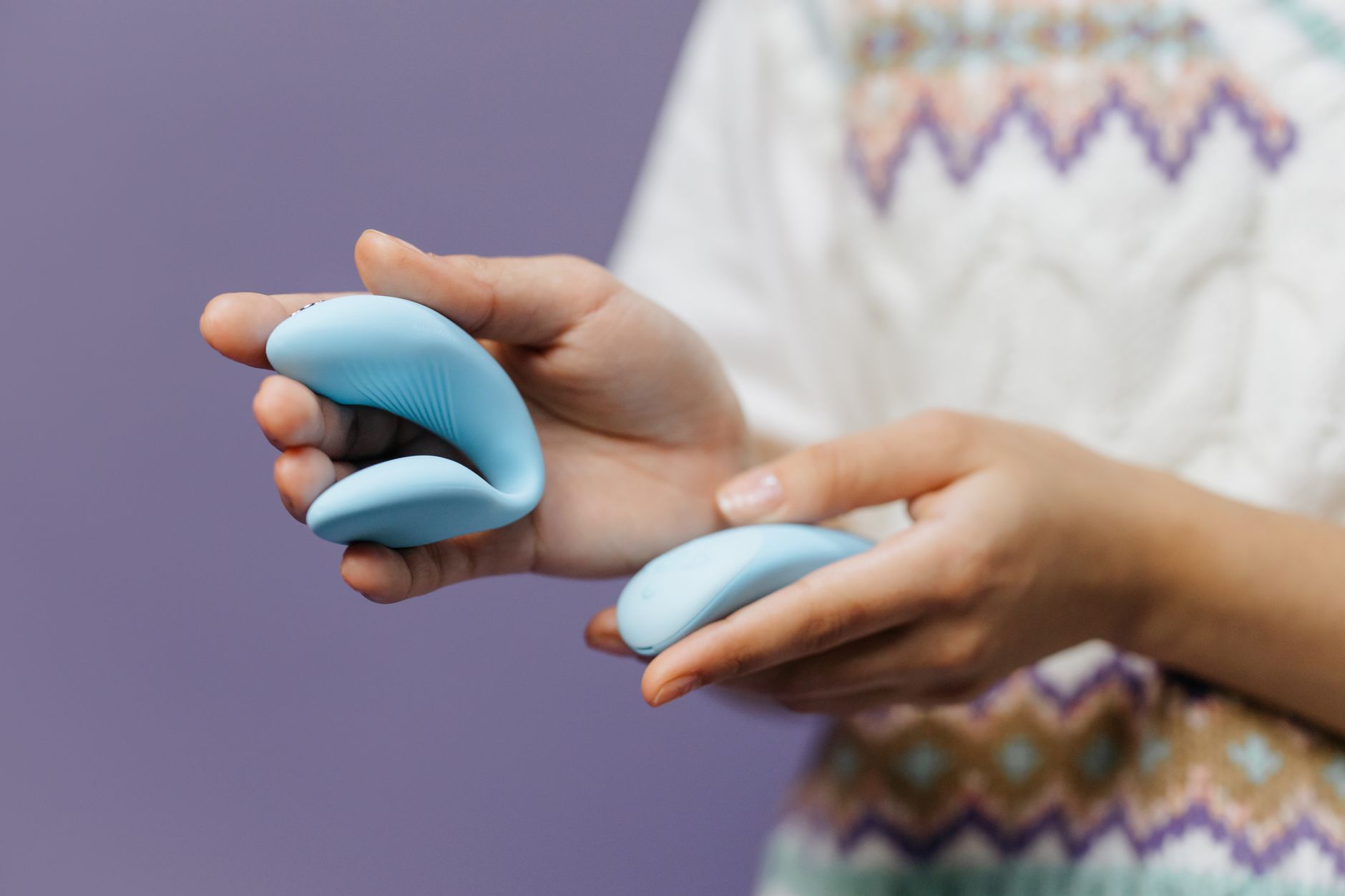
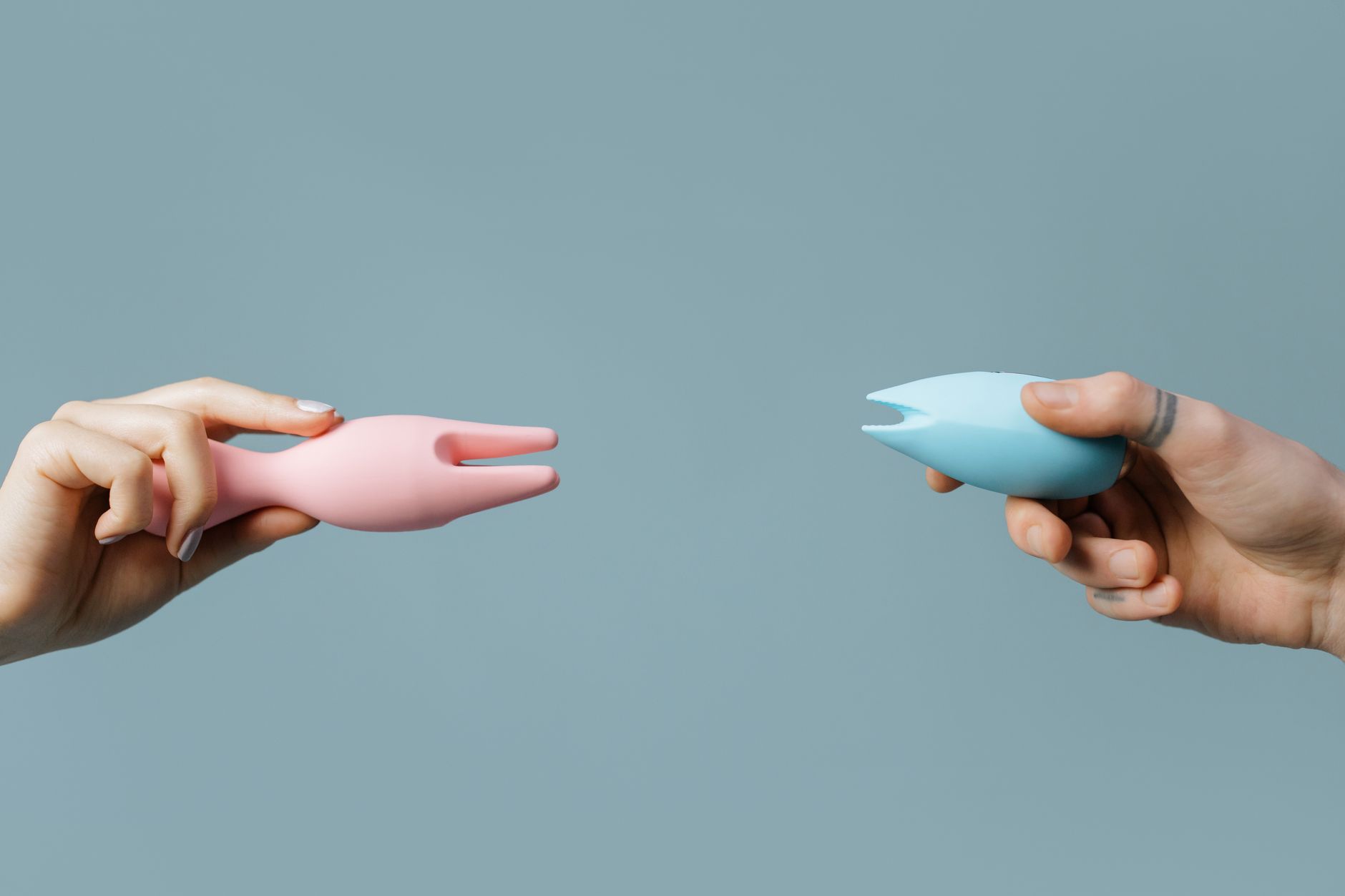
They think vibrators are weird, unnecessary, or threatening. Here's how to move past the resistance and introduce something like a lemon clitoral vibrator without defensiveness or rejection.
Your partner hears "vibrator" and thinks you're saying they're not enough. That's rarely what you mean, but that's what lands. The shame, insecurity, and defensiveness that come up aren't about the toy. They're about what the toy means in a story your partner is already telling themselves about your relationship, your body, their adequacy.
Here's what I hear in couples sessions, stripped down to the truth:
"If she needs that, I'm failing." "He thinks I'm broken." "She's going to prefer it to me." "He's bored with our sex life." "I'm worried she'll use it and never want me again."
These aren't rational objections. They're fears. And fear sounds like logic when it's defending something that matters, which intimacy definitely does. Your partner might use the word "weird" or "clinical," but the feeling underneath is usually "I'm afraid."
That's the real conversation to have. Not "sex toys are normal" (they are, but saying so doesn't land on fear). Not "it would add pleasure" (true, but irrelevant to someone worried about inadequacy). The conversation is: "I want you to know you're not failing me. I want us both to feel good. This is about adding, not replacing."
Start with curiosity, not defense. "I've noticed you seem worried about this. What's that about?" Listen to the full answer before you respond. Most partners will tell you the fear directly if they feel heard first. Don't interrupt with reassurance. Reassurance without understanding just sounds like you dismissing their concern.
Reframe the toy as something for you, not about them. Lemon vibrators work by design. They create a specific sensation that's honestly hard to replicate with hands or a partner's body alone. That's not a critique of your partner's hands. That's just physics. The clitoral suction technology does something different than friction or pressure. It's not better, it's different. "I want to feel this specific thing" is so different from "You can't make me come."
Separate pleasure from connection. This is the biggest one. Sex has multiple currencies: connection, pleasure, intimacy, release, play, reassurance. Your partner might think "vibrator" means you're downgrading the connection part. They're not. Using a lemon clitoral vibrator during partnered sex isn't an alternative to them. It's an addition. You're together. You're present. You're just adding a tool that helps your body respond differently. That's not rejection. That's clarity.
Timing matters. Don't bring it up during sex or right before. Bring it up when you're both clothed, calm, and can actually talk. Not at your partner's most vulnerable moment.
Start small. "I read about how clitoral vibrators work differently than I thought. Would you be open to learning about it together?" Then show them the science. The Lemon Pleasure Toys lemon vibrators use suction and pulsing patterns that stimulate without direct friction. That's not threatening. That's interesting. Let your partner see how it works in isolation first.
Then, softly: "Would you want to try this together?" Not "I'm using this with or without you." That's true but it lands like a threat. "Together" means they're part of it. They get to be curious, to hold it, to understand it's not replacing them.
If they say no immediately, don't push. That's information, not rejection. Ask what they need to feel okay about it. Maybe they need to hold it first. Maybe they need to watch you use it alone so it feels less like something happening to them and more like something you're exploring. Maybe they need time.
Don't make it a performance. The first time you use a lemon vibrator with your partner present, don't expect fireworks or a perfect orgasm. You're both adjusting to something new. There's self-consciousness. There's curiosity. That's normal and fine.
Use it in a way that lets your partner stay involved. If you're using a lemon clitoral vibrator, they can still touch you elsewhere, kiss you, talk to you. They're not watching from the sidelines. They're part of it.
After, talk about it. Not "wasn't that amazing" (pressure). Just "how did that feel for you?" Let them say it felt weird, or good, or nothing special. All of those are data points, not failure.
Some partners never fully warm up to toys, and that's okay. That's their boundary. Your job isn't to convince them. Your job is to respect it or decide if this is a deal-breaker for you.
But there's middle ground. Maybe your partner won't use the toy with you, but will leave the room while you use it alone. Maybe they're okay with you using it solo but not during partnered sex. Maybe in six months or a year, their comfort shifts.
Often, when a partner finally gets curious about lemon vibrators or any toy, something else shifts too. They realize you're not rejecting them. You're inviting them to see you more fully. When arousal takes longer to build with age, that's not a sign of waning desire. It's an invitation to slow down together, to pay attention differently, to build something richer.
Your partner might surprise themselves by feeling more connected, not less. That happens when the conversation moves from fear to curiosity, from defense to collaboration.
The lemon vibrator is just a tool. The real work is creating space where both of you feel safe enough to want more and ask for it.
It might, at first, if you don't separate the two things: your pleasure from their performance. The clitoral suction technology in lemon vibrators creates a sensation that hands and bodies can't replicate. That's not because your partner is failing. That's just anatomy and physics. When you frame it as "I want to feel this specific thing" rather than "You can't make me come," the story changes.
Watch for changes: Do they seem withdrawn after sex? Do they avoid initiating? Do they make jokes that sound light but feel barbed? These can signal unresolved discomfort. The kindest thing is to ask directly, outside of the bedroom: "I want to check in. How are you really feeling about using the vibrator together?" Give them permission to say "not great" without judgment. Sometimes partners need time or reassurance or a slightly different approach.
Yes, but thoughtfully. If your partner has said no to toys but you're using one anyway, that's a boundary conversation, not a sneaky workaround. Be honest: "I want to use this for myself during sex. I know you're not enthusiastic yet, but I need to explore what feels good to my body." Some partners soften when they see you're not trying to hide it. Others stay firm, and then you have a real decision to make about compatibility.
This fear is real and deserves a real answer. The honest truth: a lemon clitoral vibrator does one thing really well. It doesn't do what your partner does. It doesn't hold you, kiss you, make you laugh, remember how you like to be touched after a long day. It's not competition. It's a tool. Many people find they enjoy partnered sex more after using a vibrator solo, because they know their body better, their arousal is easier to access, and they're less frustrated. That can translate to deeper connection, not less.
Not really, and that's actually good. If you're using a toy regularly with a partner, they need to know about it and be on board. Sneaking it feels deceptive, and it compounds the problem. The conversation is awkward, but it's honest. Honesty builds trust, even when it's uncomfortable. Even when your partner pushes back at first.
Absolutely. If you and your partner can't talk about pleasure without defensiveness or shame, a therapist trained in sex and relationships can help. They're not there to force toys on anyone. They're there to help you both feel heard and to untangle what the resistance is really about. Often it has nothing to do with vibrators and everything to do with how you communicate about vulnerability.
Your partner's resistance isn't about the toy. It's about fear, shame, insecurity, or a difference in how you both think about pleasure. Those are solvable problems if you approach them with curiosity instead of defense, and with patience instead of pressure.
Lemon vibrators aren't the goal. Connection is. If a toy helps you both get there, great. If your partner never comes around, you still deserve to know your body and to choose what feels good. The conversation is just about finding the middle ground where you both feel respected.