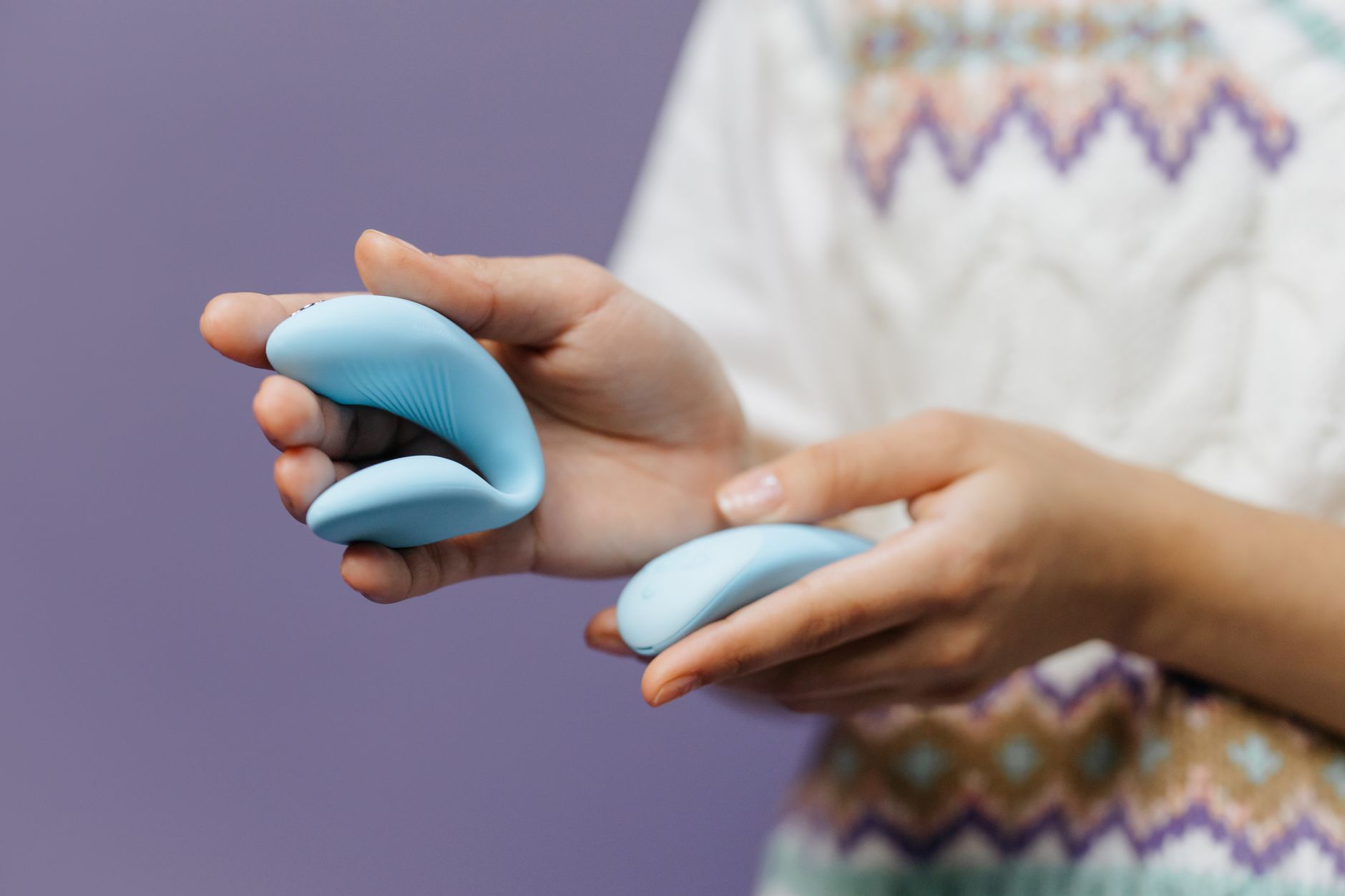
How to Use Lemon Vibrators When Sex Feels Monotonous After Years Together
The pattern trap is real. Long-term couples often lose novelty without losing love. Here's how lemon clitoral vibrators rebuild sensation when everything else feels familiar.
After five, ten, twenty years with the same partner, sex becomes predictable. Not bad. Not unloved. Just. The. Same. You know exactly where hands will go, how long foreplay will last, which positions signal the beginning and the end. Your body stops paying attention because your brain already knows the plot.
That flatness has nothing to do with loving your partner less. It's just what happens when the nervous system no longer registers novelty. Your brain is literally not firing in the same way.
The human nervous system craves novelty. Dopamine, the neurotransmitter that drives both motivation and pleasure, spikes when something is new and unpredictable. After years together, your sexual routine becomes automatic. Your brain stops releasing dopamine. The sensation becomes distant, muted. You might orgasm, but it feels like checking a box rather than feeling a rush.
This is where most couples make a critical mistake. They interpret sexual boredom as relationship boredom. "We've fallen out of love" or "The passion is gone." What's actually gone is novelty. The system has adapted. Adaptation is not the same as decline.
Introducing a tool like a lemon clitoral vibrator does two things simultaneously. First, it creates immediate physical novelty. The sensation of air-suction stimulation is genuinely different from hands or traditional vibration. Second, it requires communication and a tiny bit of vulnerability. You have to say, "I want to try this." That conversation itself breaks the automated pattern.
When you introduce something genuinely new, your brain fires differently. You're not just accessing pleasure centers. You're activating attention, anticipation, and uncertainty. Those systems have been dormant in your routine. Reactivating them is literally how you rebuild desire.
This is why just buying a toy and using it alone won't solve the problem. The tool matters, but the context matters more. If you're using a clitoral vibrator while your partner is scrolling their phone in the next room, you've added novelty to solo play but not to your shared experience.
But if you use it together, it reframes the entire interaction. Your partner sees something new on your body. They experience you responding to a sensation they're not creating. You become less predictable to them, and they become less automated in how they approach you.
Don't ask permission. Don't apologize. Just say something like: "I've been thinking about trying something new with you. Nothing complicated, just a different sensation. I want to see what it feels like, and I want you there."
That phrasing accomplishes three things. It frames this as your desire, not a criticism of them. It signals exploration, not repair. It invites them into the experience rather than asking them to fix something.
With a clitoral vibrator like the Lem, you have options for where this goes. You can use it while they watch and touch you elsewhere. You can use it while they're inside you, so they feel the secondary vibration. You can use it during foreplay to change the rhythm of buildup. None of these require a big conversation beforehand. Just bring it into the bedroom and say, "Let's try this."
Traditional vibration has probably lost its charge by now. You've felt it thousands of times. Air-suction stimulation is mechanically different. Instead of buzzing against tissue, it creates a seal and rapid micro-pulses of suction. Women who've only used buzz-style vibrators often describe the sensation as wildly different. It feels fresher, less numb-inducing, and significantly more intense.
For couples stuck in monotony, that genuine sensation difference is the entry point. It's not marketing. It's neurological. Your body actually hasn't adapted to this specific stimulus yet. That means dopamine still fires. You're not fighting an automated system. You're rebooting it.
With a lemon sucker or clitoral vibrator designed around suction, you also have more control over intensity. You can start at low suction and build. You can pulse at different speeds. You can even use it at patterns that don't feel mechanical but almost organic. That variability itself fights monotony. Nothing feels scripted.
A single new toy creates a novelty spike. That's maybe three weeks of genuine newness. Then your system adapts again. Real couples who rebuild desire do it by rotating what's novel, not by finding the perfect toy once.
So use the clitoral vibrator at a different time than usual. Not bedroom at 10 p.m. but on a Sunday afternoon. Not in the dark but with light. Not with typical foreplay but by starting here and building around it. Change the context month to month. Swap who initiates. Try it in a different room.
The toy doesn't carry the load alone. The toy is permission to rebuild how you move together.
Honestly? It might be awkward. Your partner might feel like they should do something or nothing. You might feel self-conscious. That awkwardness is actually healthy because it means you're both present instead of running autopilot.
The first orgasm with something new might not be spectacular. You're also processing novelty, slight uncertainty, and your partner's reaction simultaneously. Your nervous system is splitting focus. Second or third time, when the shock wears off and the intensity stays, that's when it usually clicks.
Give yourself permission for it to be weird at first. Weird is the opposite of monotonous.
If you've introduced novelty and initiated communication, and desire is still flat, that's a sign something else is at play. Sometimes it's resentment that's never been named. Sometimes it's one partner feeling disconnected from the other in non-sexual ways. Sometimes it's depression, stress, or medication effects.
A lemon clitoral vibrator can resurrect spark between people who still love each other. It cannot resurrect a relationship where the foundation has cracked. If you're not sure which camp you're in, talking to a couples therapist is worth the cost. Not because something is broken, but because sometimes the pattern is deeper than just routine.
For most long-term couples though, the boredom is exactly what it looks like. A nervous system that's adapted. A routine that's worked so well it's become invisible. And a fixed point: some people stop having sex entirely rather than have it feel this flat.
If that's where you are, a clitoral vibrator isn't a hail mary. It's permission to say, "Let's actually try here." And sometimes permission is all a couple needs.